Google Exhibit
2026·London
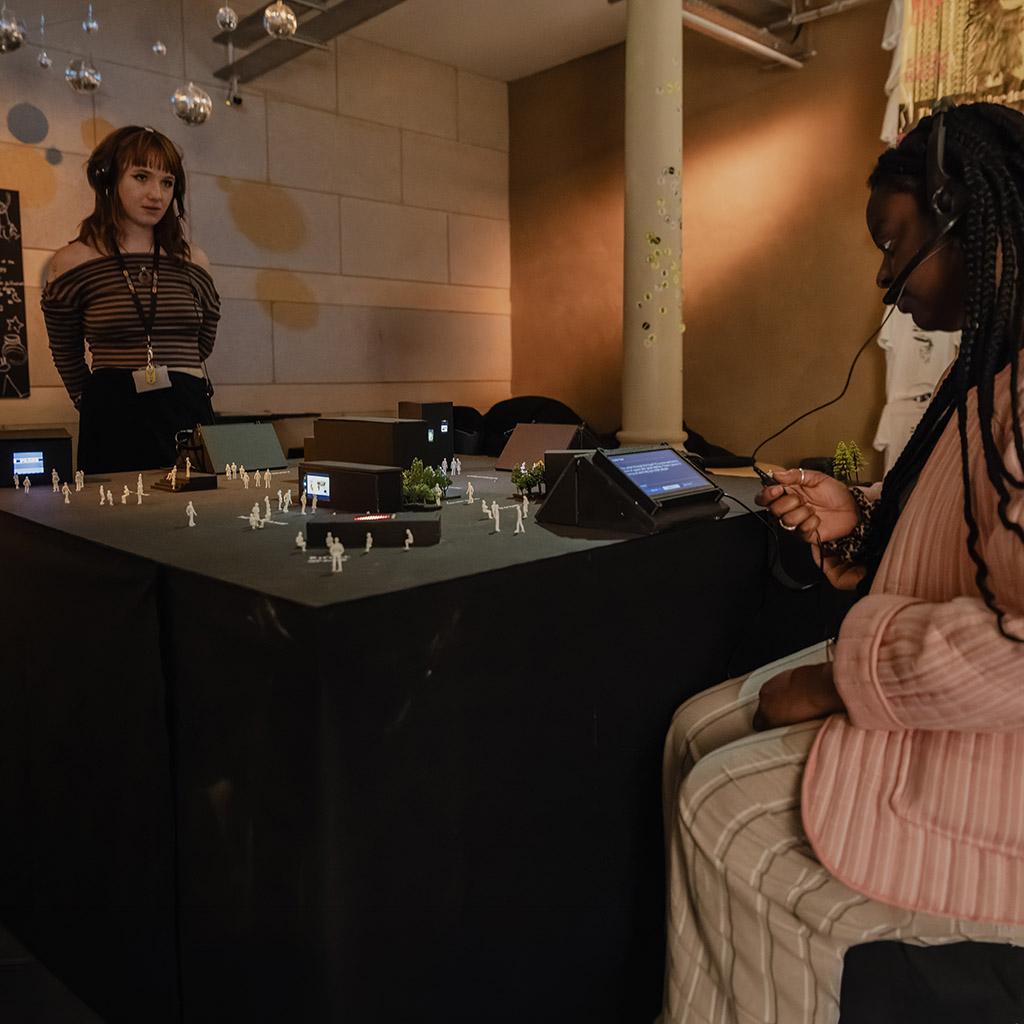
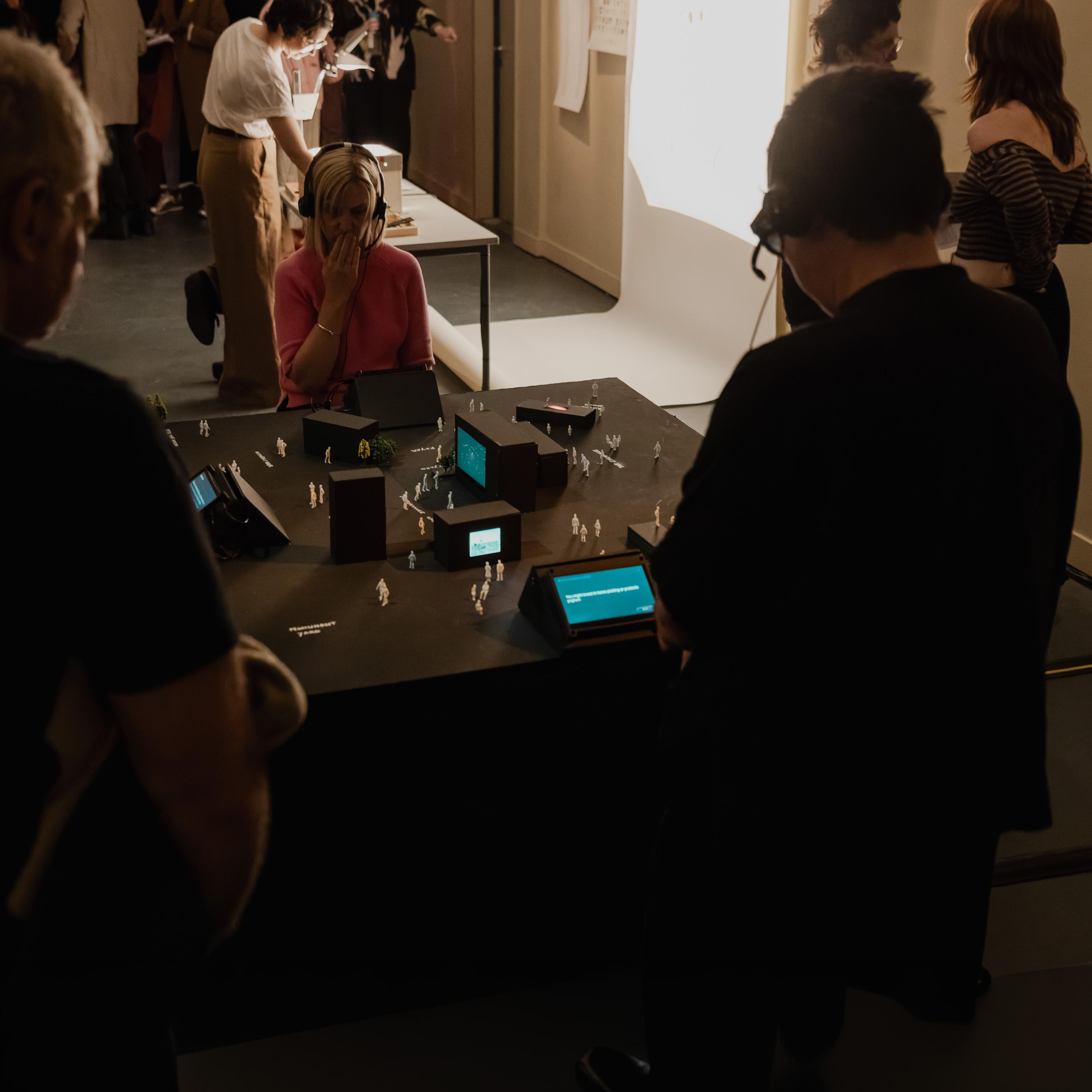
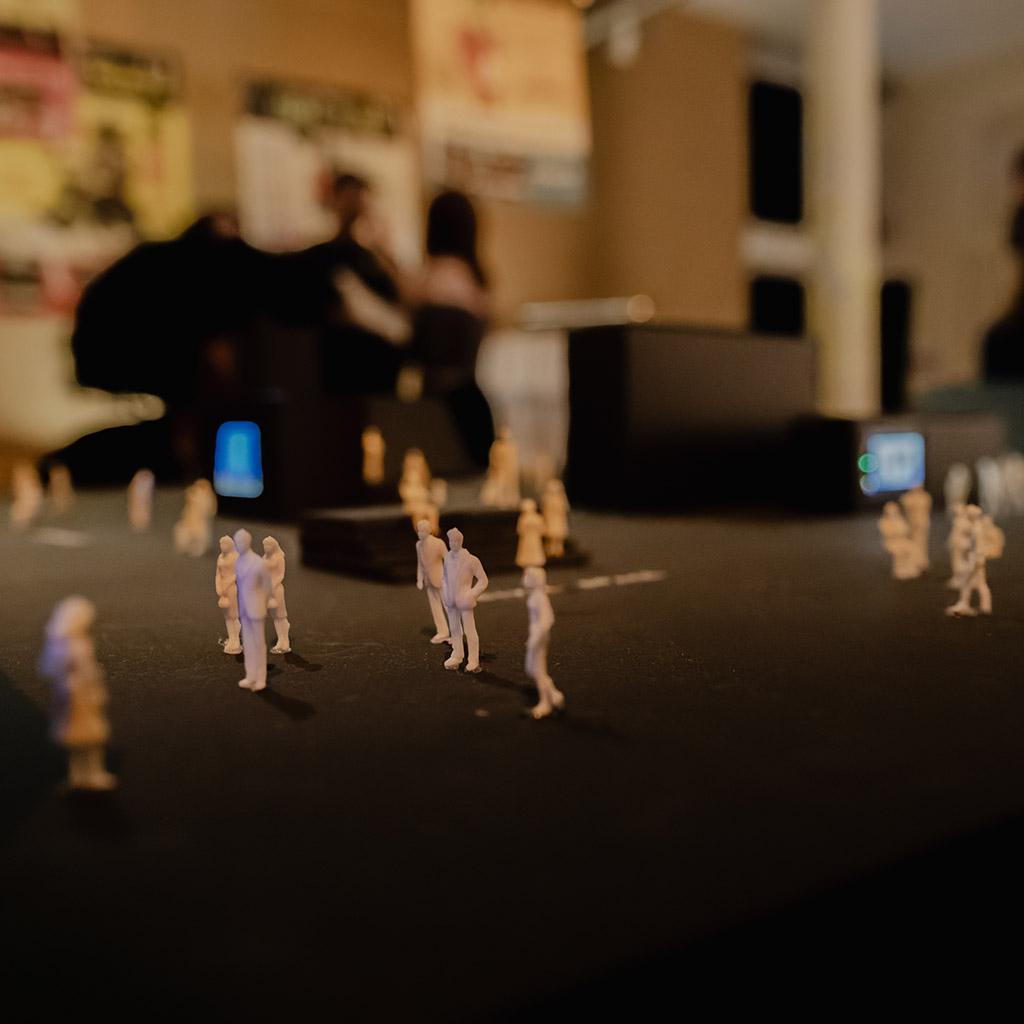
An interactive exhibition exploring how technology might reshape theatre, combining embedded screens, audio tours and an AI-driven Oracle interview experience. The installation presented work in progress by artist Annette Mees during her residency at the Centre for Sociodigital Futures, University of Bristol.
I led the end-to-end technical development of the interactive table model, including embedded displays, audio systems and LLM-driven character interactions. That meant shaping the whole stack: hardware selection, networking, frontend experience and the AI pipeline that tied it together.
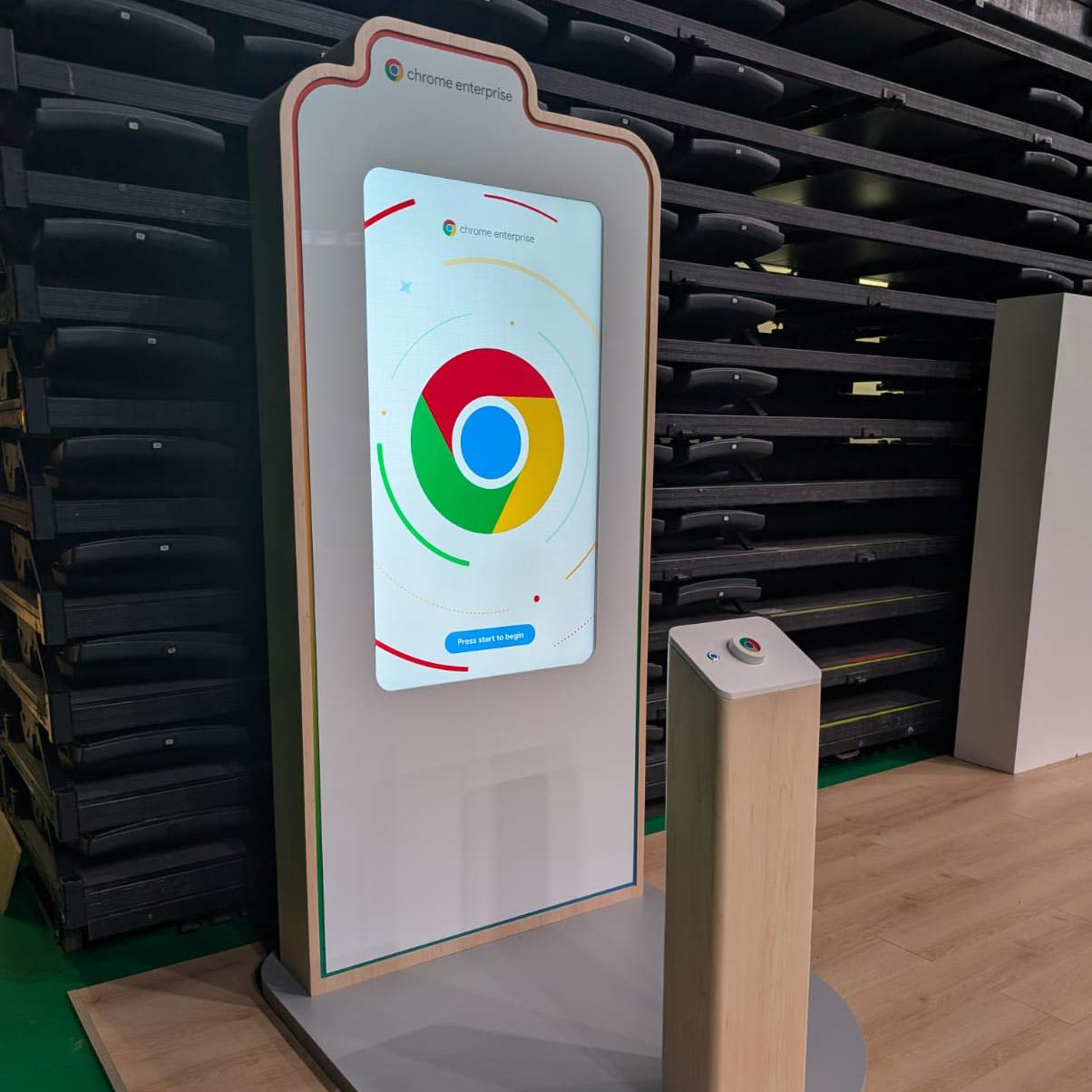
The experience ran across three Raspberry Pi kiosks and a Mac mini server, using Next.js for the frontend, Bun for runtime performance, Ollama for local LLM inference, and a FastAPI plus Whisper pipeline for real-time audio processing. Keeping everything local was a deliberate design decision: lower cost, better privacy, and far greater resilience in a gallery environment where internet access could not be trusted.
The Oracle invited visitors to speak about the future of theatre, transcribed their responses, and returned a personalised fortune generated by a locally running LLM and spoken back through text-to-speech. The aim was to make the interaction feel reflective and human, more like a conversation than a novelty demo.
Coordinating real-time audio processing, local LLM inference and animation across a mixed-hardware network on a tight budget called for careful decisions at every level. The constraints turned out to be productive: removing cloud dependencies pushed the system toward solutions that were leaner, more robust and better suited to a public installation.
Built and launched a live multi-station exhibition combining local LLM inference, embedded displays and audio interaction. It demonstrated that generative AI experiences can run privately, reliably and affordably in a public exhibition setting without cloud infrastructure.