Revamp
1999·London
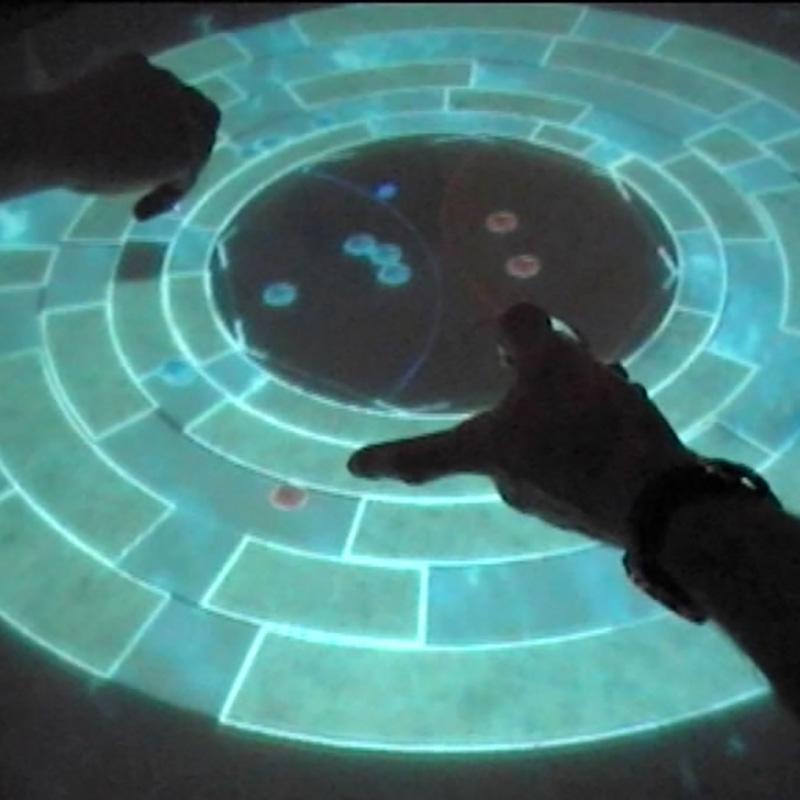
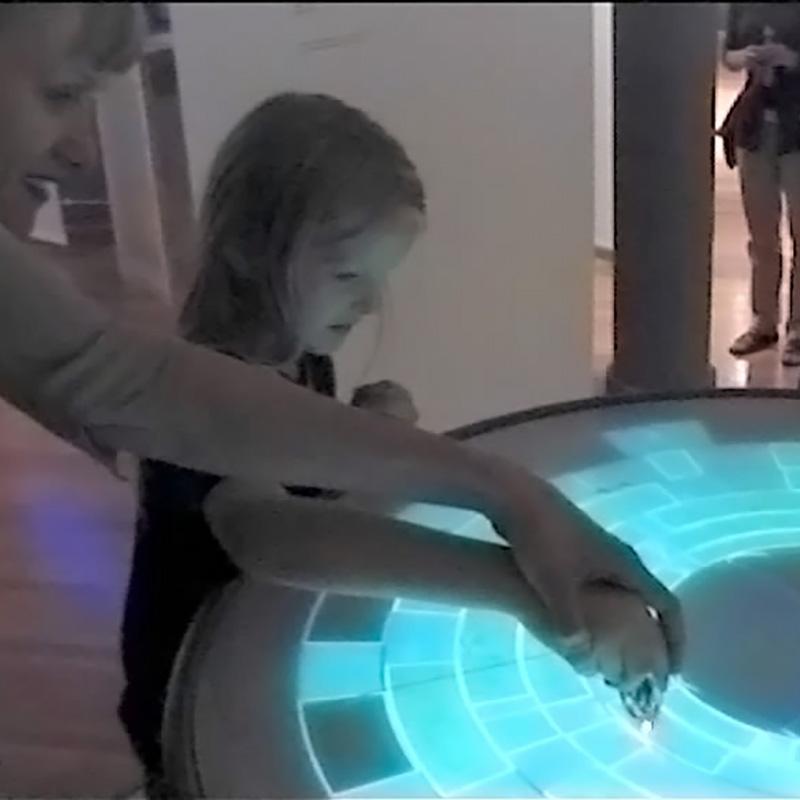
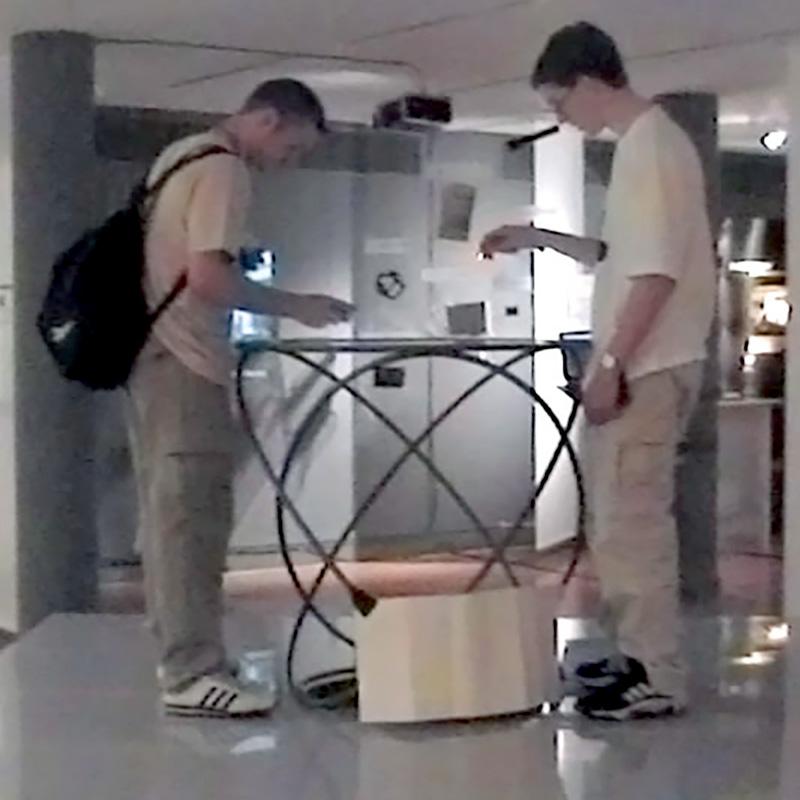
EndGame was our final project for the MA in Computer Related Design at the Royal College of Art. It was a physical-digital maze game: a projected environment layered onto a tangible board where players raced to the centre by moving physical pieces across a responsive surface.
Working with Ben Guyer, I helped develop the game logic and physical interaction model, treating the board not just as a surface but as the place where play, feedback and projection met. The collaboration let us test how far a shared physical object could carry a digital game.
The project explored what would later be called tangible computing: the idea that digital interaction does not have to sit behind a screen and mouse, but can live directly in physical objects and spaces. By turning the board itself into the display, control and feedback happened on the same surface.
Made in 1999, before tangible user interfaces had a settled name, EndGame asked a question the field still keeps returning to: what changes when digital systems respond directly to the physical world rather than pulling people away from it?
Created an RCA final project exploring tangible computing through a physical-digital maze game years before the interaction model became widely recognised.